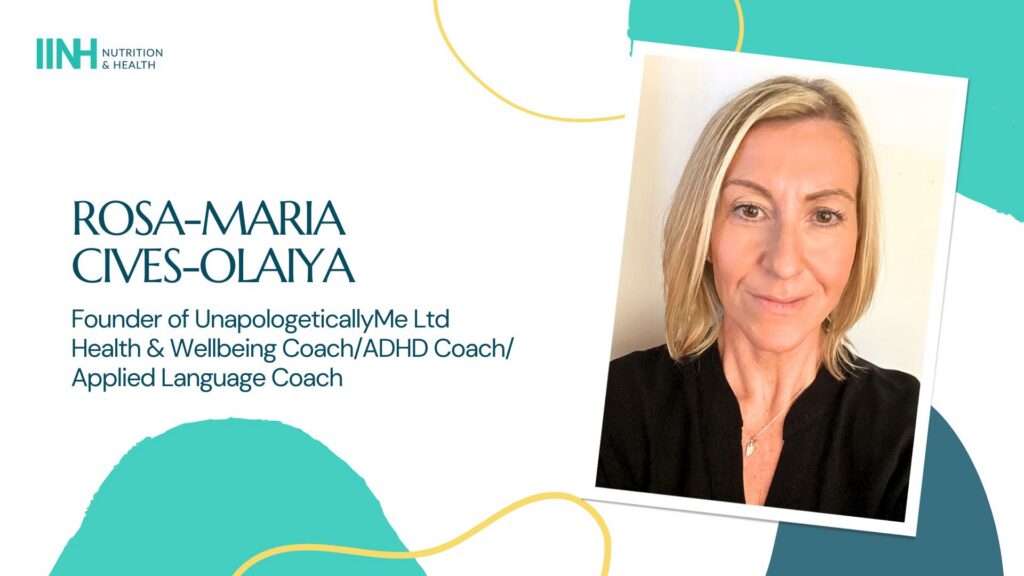
ABOUT Rosa-Maria Cives-Olaiya
I’m a Nutrition and Health Coach specialising in trauma-informed, neuroinclusive practice. I support individuals, particularly neurodiverse clients, to build sustainable habits that improve their physical health, mental wellbeing, and overall quality of life, combining personalised coaching with evidence-based nutrition and lifestyle strategies.
I’m deeply motivated by this work. Watching clients grow in confidence, develop self-efficacy, and become active agents in their own health journeys is both a privilege and the driving force behind everything I do.
What inspired you to pursue a career in Nutrition & Health Coaching or Nutritional Therapy?
I have always loved learning and was curious about the link between nutrition and wellbeing. Studying with IINH felt like a very natural ‘pit stop’ in my continuing professional development journey as a practitioner and coach.
Since qualifying, witnessing the transformative and deeply empowering impact of health and wellbeing coaching on my clients brings me immense joy. I value meeting clients where they are and responding in a personalised way that connects with their unique narratives and goals.
Ultimately, I am passionate about fostering self-efficacy and supporting individuals to become agents of their own change. Watching clients take ownership of their health and wellbeing journeys is a daily privilege for which I am deeply grateful.
Can you describe a memorable experience or achievement since graduating?
One particularly memorable experience has been supporting a 59-year-old man who, when we first met, was feeling fatigued, experiencing frequent sugar cravings and snacking, and struggling with low mood.
I provided weekly, trauma-informed, neuroinclusive coaching support over an intensive eight-week period, followed by intermittent check-ins as requested. Together, we focused on tracking one simple daily habit: committing to a minimum 30-minute walk in nature (or attending the gym in adverse weather).
By creating a psychologically safe space, starting from a place of compassion, and introducing small, actionable steps, he was able to build momentum and sustain meaningful behavioural change.
Since June 2025, his weight has decreased from 16 stone to 14.5 stone. He reports feeling fitter, less breathless, and more satisfied after meals as a result of eating a balanced diet with his family, engaging mindfully with his food, and slowing down to enjoy meals. He has also joined an online support group, which provides encouragement and accountability.
How has your training influenced your approach to health and wellness?
The ‘Nutrition and Lifestyle for Mental Health’ short course was particularly insightful. It deepened my awareness of the importance of a multifaceted approach to nurturing a healthy nervous system.
This includes maintaining good nutrition, engaging in regular physical activity, accessing therapy, counselling or coaching, practising self-care (such as yoga, meditation, relaxation, and breathwork), and fostering supportive social connections within families, friendships, and communities.
Nutrition is rarely central in conversations about mental health, yet what we eat significantly influences how effectively our brains function, including neurodiverse brains. While this may seem obvious, it is often overlooked.
How have you seen your work positively impact others?
Absolutely. Raising awareness has proven to be a powerful starting point for sustainable behaviour change and maintenance.
What kind of feedback have you received from clients or your community?
The feedback I have received has been very positive. I work predominantly with neurodiverse individuals who have become more holistically attuned and aligned as human beings.
This has enabled them to identify meaningful short, medium, and long-term goals. Clients report increased confidence and self-esteem and feel more able to express their needs, both personally and professionally, which in turn supports their overall health and wellbeing.
What’s been the most unexpected or exciting part of your journey so far?
The most exciting aspect has been recognising my own growth. I am not the same practitioner I was six to nine months ago. I have developed both professionally and personally, applying many of the lessons to myself as well as to my clients. I genuinely feel lighter as a person.
What would you say to someone thinking about studying with IINH?
I would say: do it! It’s a wonderfully supportive learning environment
If you would like to reach out to Rosa-Maria you can contact her on the below:
Email: hello@unapologeticallyme-ltd.co.uk
Website: www.unapologeticallyme-ltd.co.uk/
Social Media Links